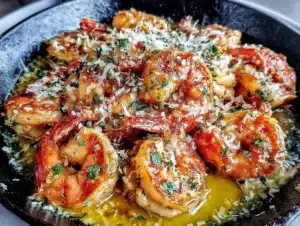
Let’s be honest for a second. I used to think restaurant-quality pasta required a chef’s degree or a pantry full of ingredients I couldn’t pronounce. I remember standing in my tiny apartment kitchen at 9 PM, staring at a menu on my phone. The delivery time was 45 minutes, and the price for a single plate of shrimp pasta had jumped to $28. I was hungry, tired, and ready to settle for something mediocre.
That was the moment I decided to try making creamy garlic shrimp linguine at home. I had two heads of garlic, a pound of shrimp I’d bought on impulse, and a package of linguine that was slowly going stale in the back of the cupboard. I didn’t have heavy cream, so I improvised with a splash of pasta water and a handful of parmesan. The result? It was rich, buttery, and packed with flavor that actually tasted better than the $28 version.
Since then, I’ve made this creamy garlic shrimp linguine recipe at least fifty times. It’s my go-to when I want to feel fancy without the fancy price tag. It’s also perfect for those busy weeknights when you need dinner on the table before the kids start complaining. The key is in the technique—specifically, how you handle the garlic and the shrimp. Get it wrong, and you end up with burnt bits and rubbery seafood. Get it right, and you have dinner party magic in twenty minutes.
What I love most about this dish is how comforting it feels. It’s not just food; it’s a hug in a bowl. The creaminess coats every strand of pasta, and the garlic provides that savory punch that keeps you coming back for more. If you’re skeptical about making restaurant-style pasta at home, trust me. Once you taste this creamy garlic shrimp linguine, you’ll never order takeout again. It’s simple, it’s fast, and it’s absolutely delicious.
Why You’ll Love This Recipe
There are a lot of pasta recipes out there, but this one stands out for reasons that go beyond just taste. After testing this dish over and over, I’ve found that it strikes the perfect balance between indulgence and simplicity. You don’t need to be an expert cook to pull this off. In fact, the less you overthink it, the better it turns out. Here is why this specific version of creamy garlic shrimp linguine deserves a spot in your weekly rotation.
- It’s genuinely quick: From boiling the water to plating the dish, you’re looking at about 20 minutes. This is crucial for busy weeknights when you’re exhausted after work. You can have a hot, homemade meal on the table faster than you can wait for a delivery driver to ring the doorbell.
- Pantry-friendly ingredients: You likely already have most of what you need. Shrimp, pasta, garlic, butter, and cream are staples in most kitchens. If you don’t have heavy cream, half-and-half or even a splash of milk with extra parmesan works wonders. This means no special grocery runs are required.
- It’s a crowd-pleaser: I’ve served this to picky eaters and gourmet foodies alike. Everyone loves shrimp and pasta. It’s a safe bet for date nights, family dinners, or potlucks. The garlic flavor is bold but not overpowering, making it appealing to a wide range of palates.
- Restaurant-quality texture: The secret lies in emulsifying the sauce. By tossing the pasta directly in the pan with the garlic butter and cream, the starch from the pasta binds with the fat. This creates a silky, glossy coating that clings to every noodle. It’s the kind of texture that makes you close your eyes and sigh with satisfaction.
- Flexible and forgiving: Don’t have fresh herbs? Use dried. Can’t find linguine? Fettuccine or spaghetti will work just fine. This recipe adapts to what you have on hand. It’s not rigid or stressful. It’s designed to fit into your life, not the other way around.
What really sets this creamy garlic shrimp linguine apart is the balance of flavors. It’s not just heavy cream and garlic. The acidity from a squeeze of lemon at the end cuts through the richness, brightening up the whole dish. The shrimp adds a sweet, briny contrast to the savory pasta. It’s comfort food, but elevated. It feels special, yet it’s incredibly easy to make. Honestly, once you try this, you’ll wonder why you ever bothered with takeout. It’s the kind of meal that reminds you why cooking at home is so rewarding.
What Ingredients You Will Need
This recipe relies on high-quality, simple ingredients to deliver bold flavor. Because the dish has few components, each one plays a critical role. You want your shrimp to be fresh and your garlic to be fragrant. Here is what you need to make the best creamy garlic shrimp linguine.
- Linguine: About 1 pound of dried linguine. I prefer bronze-die extruded pasta because it has a rougher texture that holds sauce better. Brands like Buitoni or De Cecco are reliable choices. If you can’t find linguine, spaghetti or fettuccine are good substitutes.
- Large Shrimp: 1 to 1.5 pounds of large shrimp, peeled and deveined. Look for shrimp that are labeled “wild-caught” if possible, as they tend to have better flavor. Make sure they are raw, not pre-cooked. Pre-cooked shrimp often turn rubbery when you sauté them again. Pat them dry with paper towels before cooking to ensure they sear properly.
- Garlic: 6 to 8 cloves of fresh garlic, minced. Don’t use jarred garlic if you can help it. Fresh garlic has a brighter, more pungent flavor that stands up to the cream. Mince it finely so it distributes evenly throughout the sauce. If you’re sensitive to strong garlic, you can reduce this to 4 cloves, but the flavor won’t be as robust.
- Butter: 4 tablespoons of unsalted butter. Using unsalted butter allows you to control the salt level in the dish. If you only have salted butter, reduce the added salt in the recipe. Salted butter can make the dish too salty, especially when combined with parmesan.
- Heavy Cream: 1 cup of heavy cream. This provides the rich, creamy base for the sauce. For a lighter version, you can use half-and-half, but the sauce will be thinner. If you want a dairy-free option, coconut cream works well, though it will change the flavor profile slightly.
- White Wine: 1/2 cup of dry white wine, such as Sauvignon Blanc or Pinot Grigio. The wine deglazes the pan and adds acidity and depth. If you don’t drink alcohol, you can substitute it with chicken broth plus a tablespoon of lemon juice. The acidity is key to balancing the richness.
- Parmesan Cheese: 1/2 cup of freshly grated parmesan cheese. Freshly grated cheese melts much better than pre-grated cheese, which contains anti-caking agents. Look for a block of parmesan and grate it yourself. It makes a huge difference in the smoothness of the sauce.
- Red Pepper Flakes: 1/2 teaspoon of red pepper flakes. These add a subtle heat that complements the garlic. Adjust the amount based on your spice tolerance. If you’re not a fan of heat, you can omit this or use just a pinch.
- Fresh Parsley: 1/4 cup of fresh parsley, chopped. Parsley adds a fresh, herbal note that brightens up the heavy sauce. Flat-leaf parsley is preferred for its clean flavor. Basil is also a good alternative if you prefer a sweeter herb profile.
- Lemon: 1 lemon, zested and juiced. The lemon juice adds brightness, and the zest adds aromatic oils. Don’t skip the zest! It adds a layer of complexity that plain juice doesn’t provide.
- Salt and Black Pepper: To taste. Season your shrimp and sauce generously. Taste as you go to ensure the flavors are balanced.
One tip I’ve learned over the years is to buy shrimp that are “wild-caught” rather than “farm-raised.” They tend to have a firmer texture and a sweeter taste. Also, always pat your shrimp dry. Moisture is the enemy of a good sear. If the shrimp are wet, they will steam instead of brown, and you’ll miss out on that delicious caramelized flavor.
Equipment Needed
You don’t need fancy gadgets to make this creamy garlic shrimp linguine. A few basic kitchen tools will get you exactly where you need to go. Here is what you’ll need.
- Large Skillet or Sauté Pan: A 12-inch skillet is ideal. You need enough surface area to cook the shrimp in a single layer. If your pan is too small, the shrimp will crowd and steam. Cast iron or stainless steel pans work best because they retain heat well. Non-stick pans are okay if you’re careful, but they won’t give you the same fond (browned bits) that adds flavor.
- Pot for Boiling Pasta: A large stockpot is necessary for boiling the linguine. You need plenty of water for the pasta to move around freely. This helps prevent sticking and ensures even cooking.
- Colander: For draining the pasta. A colander with fine holes is best to catch any small bits of pasta.
- Microplane or Grater: For grating the parmesan and lemon zest. A microplane gives you the finest texture, which melts seamlessly into the sauce. Avoid large grates, as the cheese chunks won’t emulsify properly.
- Tongs:
- Cutting Board and Knife: A sharp chef’s knife is helpful for mincing the garlic. A dull knife will crush the garlic rather than slice it, leading to uneven cooking.
If you don’t have a 12-inch skillet, a large wok can work as an alternative. The curved sides help with tossing the pasta. Just make sure it’s deep enough to hold the sauce without splattering. Also, keep your pasta water handy. You’ll need it for the sauce, so don’t dump it all down the drain!
Preparation Method
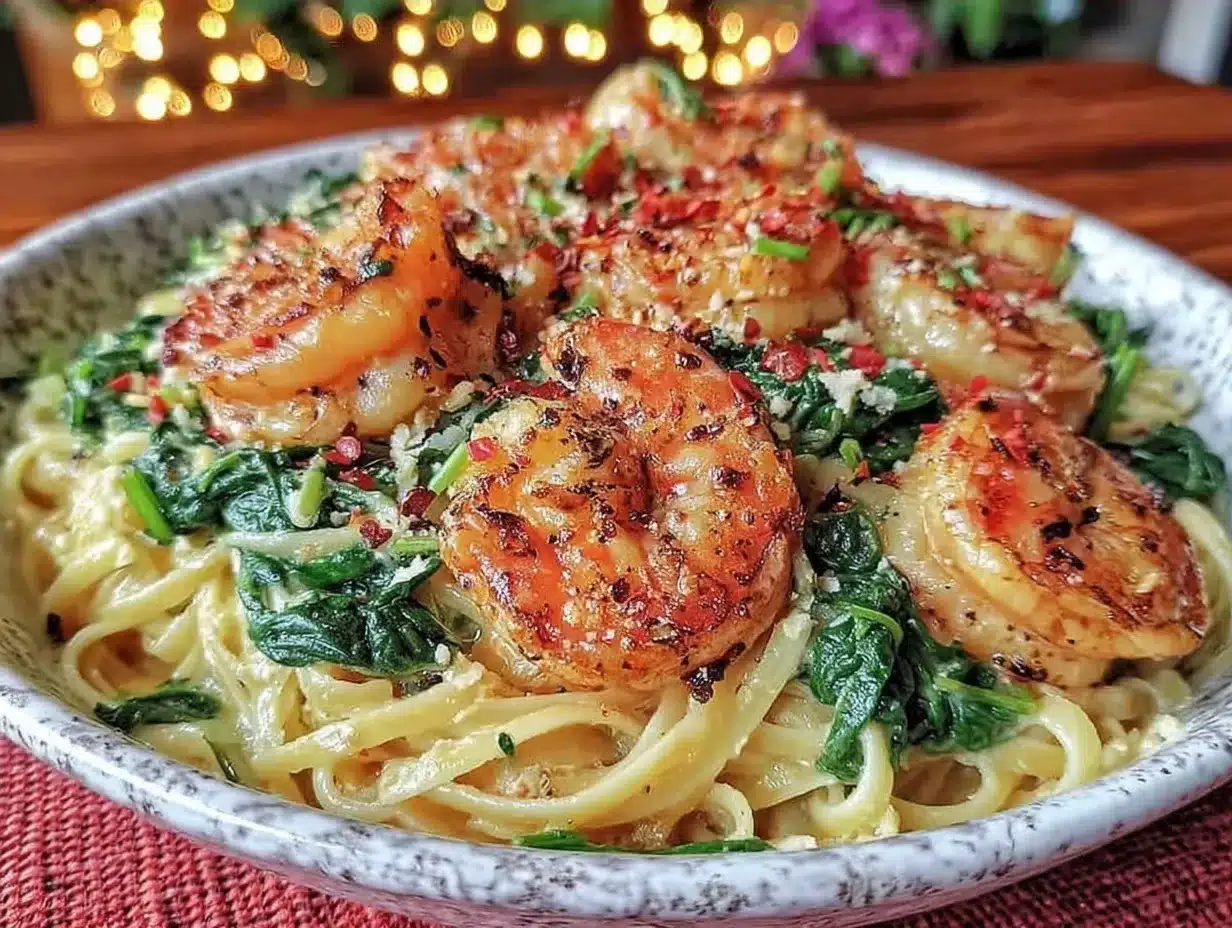
Let’s get into the nitty-gritty of making this creamy garlic shrimp linguine. The process is straightforward, but timing is everything. Here is how to pull it all together.
- Boil the Pasta: Bring a large pot of salted water to a boil. Add the linguine and cook according to package directions, but reduce the cooking time by 1-2 minutes. You want the pasta to be al dente, as it will finish cooking in the sauce. Reserve 1 cup of pasta water before draining. This starchy water is liquid gold for the sauce.
- Prep the Shrimp: While the water is boiling, pat the shrimp dry with paper towels. Season them generously with salt and black pepper. This step is crucial for flavor. If the shrimp are wet, they won’t sear properly.
- Sear the Shrimp: Heat a large skillet over medium-high heat. Add 2 tablespoons of butter. Once the butter is melted and foaming, add the shrimp in a single layer. Do not overcrowd the pan. Cook for 1-2 minutes per side until pink and opaque. Remove the shrimp from the pan and set aside on a plate. Overcooking the shrimp now will make them rubbery later.
- Sauté the Garlic: In the same pan, add another 2 tablespoons of butter. Reduce the heat to medium. Add the minced garlic and red pepper flakes. Sauté for about 1 minute, stirring constantly. Watch closely! Garlic burns quickly. You want it fragrant and golden, not brown or black. If it starts to darken, remove the pan from the heat immediately.
- Make the Sauce: Pour in the white wine and let it simmer for 1-2 minutes to reduce slightly. This cooks off the alcohol and concentrates the flavor. Then, pour in the heavy cream. Let it simmer gently for 2-3 minutes until it thickens slightly. Do not let it boil vigorously, or the cream might separate.
- Combine Everything: Add the drained pasta to the skillet with the sauce. Toss well to coat the noodles. If the sauce is too thick, add a splash of the reserved pasta water. The starch in the water will help emulsify the sauce, making it silky and glossy. Add the parmesan cheese and toss until melted.
- Add the Shrimp: Return the cooked shrimp to the pan. Gently toss everything together for 1 minute to heat the shrimp through. Be gentle so you don’t break the shrimp.
- Finish and Serve: Remove the pan from the heat. Stir in the lemon juice and lemon zest. Taste and adjust seasoning with salt and pepper. Garnish with fresh parsley and serve immediately.
One personal tip: I always add the lemon juice at the very end, off the heat. Heat can dull the bright flavor of lemon. Adding it last preserves that fresh, zesty punch that cuts through the richness of the cream.
Cooking Tips & Techniques
Making restaurant-quality pasta at home comes down to a few key techniques. Here is how to avoid common mistakes and ensure your creamy garlic shrimp linguine turns out perfectly every time.
- Don’t Overcook the Shrimp: Shrimp cook very quickly. They are done when they turn pink and opaque. If you cook them too long, they become tough and chewy. Remove them from the pan early and add them back at the end just to warm through.
- Watch the Garlic: Garlic is the star of this dish, but it burns easily. Keep the heat at medium and stir constantly. If you see the garlic turning brown, take the pan off the heat. Burnt garlic tastes bitter and ruins the whole sauce.
- Use Pasta Water: Never skip the pasta water! The starch in the water helps bind the sauce to the pasta. It creates an emulsion that makes the sauce cling to every noodle. Add it gradually until you reach your desired consistency.
- Emulsify the Sauce: To get that glossy, restaurant-style finish, toss the pasta vigorously in the sauce. The mechanical action of tossing helps mix the fat and water into a smooth, creamy emulsion. This is the secret to a sauce that isn’t greasy or separated.
- Season in Layers: Season your shrimp before cooking, season your pasta water generously, and taste the sauce before serving. This ensures that every component of the dish is flavorful, not just the sauce.
I once made this dish with pre-minced garlic from a jar. The flavor was flat and lacked the punch of fresh garlic. Since then, I’ve never used jarred garlic for this recipe. Fresh garlic makes a world of difference. Also, don’t be afraid to taste as you go. Adjust the salt and acid until it tastes balanced to your palate.
Variations & Adaptations
While I love this classic version of creamy garlic shrimp linguine, there are plenty of ways to adapt it to suit your preferences or dietary needs. Here are a few ideas.
- Lighter Version: Swap the heavy cream for half-and-half or whole milk. You can also thicken the sauce with a slurry of cornstarch and water. This reduces the calorie count without sacrificing too much texture.
- Vegetarian Option: Skip the shrimp and add sautéed mushrooms or asparagus. The garlic and cream sauce works beautifully with vegetables too. Mushrooms add a savory, umami depth that complements the cream.
- Spicy Kick: Add more red pepper flakes or a dash of cayenne pepper. If you like heat, you can also stir in a spoonful of harissa paste for a smoky, spicy twist.
- Herb Swap: If you don’t like parsley, try basil or thyme. Basil pairs particularly well with lemon and garlic. Add it at the end to keep the flavor fresh.
- Gluten-Free: Use gluten-free pasta. Rice-based or corn-based pastas work well, but be careful not to overcook them, as they can become mushy quickly.
I once made this with asparagus instead of shrimp, and it was surprisingly delicious. The crisp-tender asparagus added a nice contrast to the creamy sauce. Feel free to experiment with what you have in your fridge. The base recipe is very forgiving.
Serving & Storage Suggestions
This creamy garlic shrimp linguine is best served immediately while the pasta is hot and the sauce is glossy. Here are some tips for serving and storing leftovers.
- Serving: Garnish with extra parmesan cheese and fresh parsley. A wedge of lemon on the side allows guests to add more acidity if they prefer. Serve with a simple green salad and crusty bread to soak up the extra sauce.
- Storage: Leftovers can be stored in an airtight container in the refrigerator for up to 3 days. The pasta will absorb some of the sauce, so it may look dry when you take it out.
- Reheating: To reheat, add a splash of water or milk to the pan. Warm gently over low heat, stirring frequently. This helps loosen the sauce and prevents the pasta from drying out. Avoid using the microwave, as it can make the shrimp rubbery.
- Freezing: This dish does not freeze well. The cream sauce may separate, and the shrimp texture can become unpleasant. It’s best enjoyed fresh.
The flavors actually meld together nicely if you let the leftovers sit for a few hours in the fridge. The pasta absorbs more of the garlic and cream flavor. Just be sure to reheat it gently with added liquid.
Nutritional Information & Benefits
This creamy garlic shrimp linguine is not only delicious but also offers some nutritional benefits. Here is a general overview.
- High Protein: Shrimp is an excellent source of lean protein. A serving provides around 20-25 grams of protein, which helps with muscle repair and satiety.
- Low Carb Option: By swapping the linguine for zucchini noodles or shirataki noodles, you can significantly reduce the carb count. This makes the dish suitable for low-carb or keto diets.
- Heart-Healthy Fats: The olive oil and butter provide fats, but you can balance this by using a mix of butter and olive oil. Olive oil adds heart-healthy monounsaturated fats.
- Calcium: The parmesan cheese adds calcium and protein. Just be mindful of the sodium content if you are watching your salt intake.
While this dish is indulgent, it can be part of a balanced diet. The key is portion control and balancing it with vegetables. I often serve it with a side of steamed broccoli or a large green salad to add fiber and nutrients.
Conclusion
Making creamy garlic shrimp linguine at home is easier than you think. It’s a dish that feels luxurious but comes together in just 20 minutes. The combination of tender shrimp, al dente pasta, and rich garlic cream sauce is pure comfort. I hope this recipe becomes a staple in your kitchen, just as it has in mine.
Feel free to tweak the recipe to suit your tastes. Add more garlic if you love it, or swap the shrimp for chicken or tofu. The beauty of this dish is its flexibility. I’d love to hear how you make it your own. Leave a comment below with your favorite variations or tips. And if you try this recipe, don’t forget to share a photo! Tag me on social media so I can see your creations. Happy cooking!
FAQs
Can I use frozen shrimp for this recipe?
Yes, you can use frozen shrimp. Just make sure to thaw them completely and pat them very dry with paper towels. Excess moisture will prevent them from searing properly. Thawing them under cold running water for a few minutes works well.
What can I substitute for heavy cream?
You can substitute heavy cream with half-and-half, whole milk, or even coconut cream for a dairy-free option. Keep in mind that lighter creams will result in a thinner sauce. You may need to simmer it longer to reduce and thicken.
How do I prevent the sauce from separating?
To prevent separation, avoid boiling the cream vigorously. Simmer it gently. Also, add the parmesan cheese off the heat or on very low heat. High heat can cause the fats to separate from the liquid. Tossing the pasta well helps emulsify the sauce.
Can I make this dish ahead of time?
It’s best to make this dish fresh. The pasta continues to absorb the sauce, and the shrimp can become rubbery if reheated. If you must prep ahead, cook the sauce and shrimp separately, and cook the pasta just before serving. Combine everything when you’re ready to eat.
Is this recipe gluten-free?
The standard recipe uses wheat-based linguine, so it is not gluten-free. However, you can easily make it gluten-free by using gluten-free pasta. Most rice or corn-based pastas work well in this recipe. Just follow the package cooking instructions carefully.
Pin This Recipe!
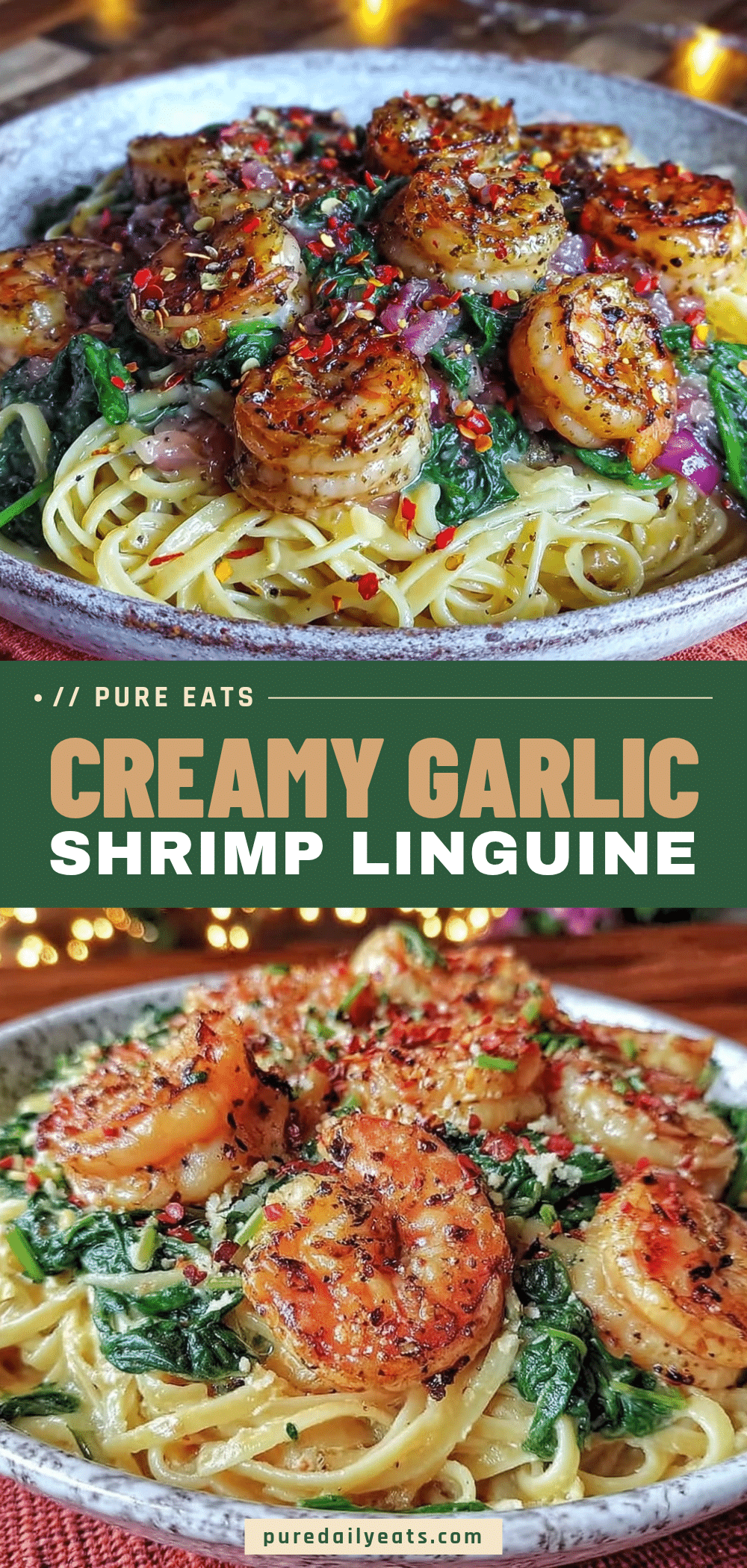
Creamy Garlic Shrimp Linguine: 20-Min Easy Dinner
- Total Time: 20 minutes
- Yield: 4 servings 1x
Description
A quick, restaurant-quality creamy garlic shrimp linguine that comes together in just 20 minutes using simple pantry ingredients. This rich, buttery pasta dish balances savory garlic, tender shrimp, and a silky emulsified sauce.
Ingredients
- 1 pound dried linguine
- 1 to 1.5 pounds large shrimp, peeled and deveined
- 6 to 8 cloves fresh garlic, minced
- 4 tablespoons unsalted butter
- 1 cup heavy cream
- 1/2 cup dry white wine (such as Sauvignon Blanc or Pinot Grigio)
- 1/2 cup freshly grated parmesan cheese
- 1/2 teaspoon red pepper flakes
- 1/4 cup fresh parsley, chopped
- 1 lemon, zested and juiced
- Salt and black pepper, to taste
- 1 cup reserved pasta water
Instructions
- Bring a large pot of salted water to a boil. Add linguine and cook according to package directions, reducing time by 1-2 minutes for al dente texture. Reserve 1 cup of pasta water before draining.
- While water boils, pat shrimp dry with paper towels and season generously with salt and black pepper.
- Heat a large skillet over medium-high heat. Add 2 tablespoons of butter. Once melted and foaming, add shrimp in a single layer. Cook 1-2 minutes per side until pink and opaque. Remove shrimp and set aside.
- In the same pan, add remaining 2 tablespoons of butter. Reduce heat to medium. Add minced garlic and red pepper flakes. Sauté for about 1 minute until fragrant and golden, stirring constantly to prevent burning.
- Pour in white wine and simmer for 1-2 minutes to reduce. Add heavy cream and simmer gently for 2-3 minutes until slightly thickened. Do not boil vigorously.
- Add drained pasta to the skillet with the sauce. Toss well to coat. Add reserved pasta water as needed to emulsify the sauce. Stir in parmesan cheese until melted.
- Return cooked shrimp to the pan. Gently toss everything together for 1 minute to heat shrimp through.
- Remove pan from heat. Stir in lemon juice and lemon zest. Taste and adjust seasoning with salt and pepper. Garnish with fresh parsley and serve immediately.
Notes
Pat shrimp dry before cooking to ensure a good sear. Do not overcrowd the pan when searing shrimp. Use fresh garlic for best flavor; avoid jarred garlic. Add lemon juice off the heat to preserve brightness. The dish does not freeze well; store leftovers in the refrigerator for up to 3 days and reheat gently with a splash of water or milk.
- Prep Time: 10 minutes
- Cook Time: 10 minutes
- Category: Main Course
- Cuisine: Italian
Nutrition
- Serving Size: 1 plate
- Calories: 650
- Sugar: 3
- Sodium: 800
- Fat: 28
- Saturated Fat: 14
- Carbohydrates: 65
- Fiber: 3
- Protein: 35
Keywords: shrimp pasta, creamy garlic sauce, linguine, quick dinner, weeknight meals, seafood pasta, easy recipes, restaurant style pasta