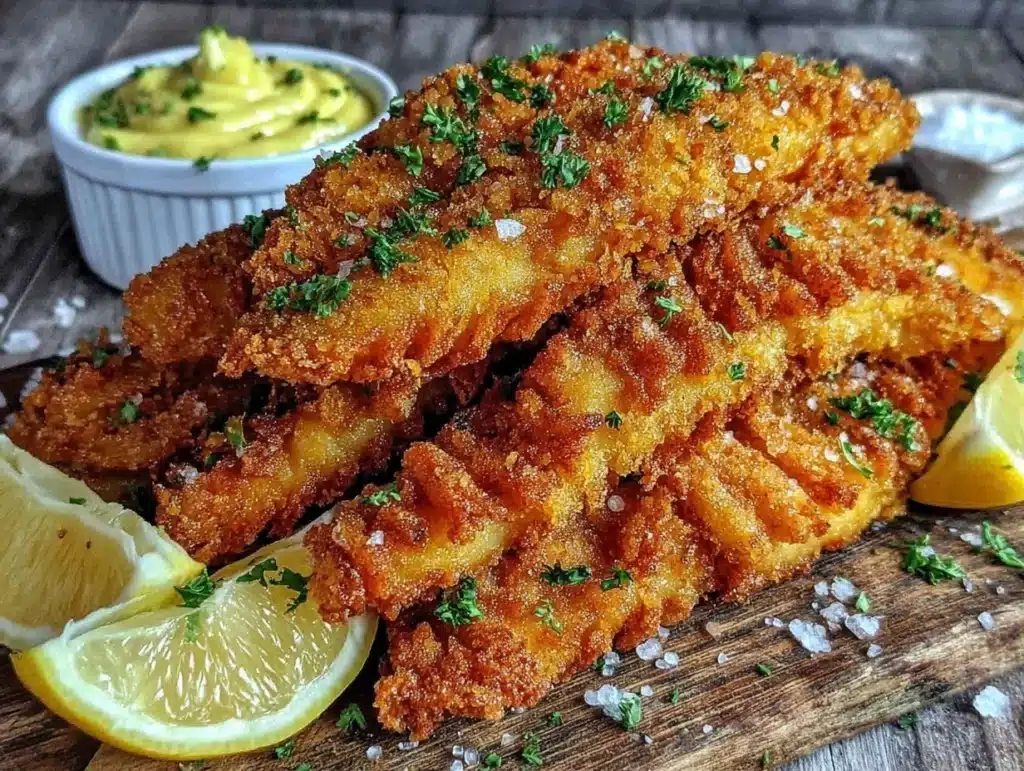
You know that sound? The sharp, satisfying *crunch* when your fork hits perfectly fried fish? It is music to my ears. I remember sitting on my cousin’s porch in Louisiana, the humid air thick with the scent of blooming jasmine and frying oil. He handed me a paper plate with three golden-brown fillets, dusted with a little bit of salt and pepper. I took one bite, and honestly, it changed everything for me. That was the moment I realized that fried catfish isn’t just food; it’s a memory. It’s comfort. It’s home.
I have spent years trying to replicate that exact texture. Not soggy. Not greasy. Just crisp, flaky, and flavorful. Most recipes call for a heavy batter that tastes like cardboard. I wanted something lighter, something that let the sweet, mild flavor of the catfish shine through. After testing this recipe over a dozen times (and throwing out a few batches that were too dense), I finally nailed it. The secret? A simple blend of cornmeal and flour, seasoned generously. It is quick, easy, and tastes like a Sunday supper.
This Classic Southern Fried Catfish recipe is perfect for busy weeknights or lazy weekends. You only need about 20 minutes from start to finish. Whether you are feeding a hungry family or just craving some crispy fish for yourself, this dish delivers. It pairs beautifully with coleslaw or hushpuppies, but let’s be honest, it is often gone before the sides even hit the table. I’ve made this for potlucks, date nights, and solo dinners where I needed a little pick-me-up. It never fails. The crust stays crunchy even after a few minutes, which is rare for fried foods. You will love how simple it is to make restaurant-quality fish in your own kitchen.
Why You’ll Love This Recipe
There are a lot of ways to cook catfish, but frying it this way? It is just different. It is the kind of meal that makes you close your eyes and sigh after the first bite. It is not just about being full; it is about being satisfied. Here is why this recipe stands out from the rest:
- Quick & Easy: You can have this on the table in under 30 minutes. The prep is minimal, mostly just seasoning and dredging. It is perfect for those nights when you are tired and don’t want to spend hours in the kitchen.
- Simple Ingredients: You likely already have everything in your pantry. Cornmeal, flour, spices, and eggs. No fancy grocery trips or hard-to-find items. This is accessible cooking for everyone.
- Perfect Texture: The mix of cornmeal and flour creates a crust that is shatteringly crisp but not too thick. It gives you that authentic “bite” without overwhelming the tender fish inside. It is next-level comfort food.
- Crowd-Pleaser: Kids love the crunch. Adults love the flavor. I have served this to picky eaters who usually turn their noses up at fish, and they came back for seconds. It is a surefire hit.
- Authentic Flavor: This isn’t just another version. It is my tested, family-approved version. The seasoning blend is balanced perfectly—spicy enough to interest you, but mild enough for everyone.
What makes this recipe special is the technique. Many people skip the egg wash or rush the dredging process. I found that letting the fish rest in the fridge for 15 minutes before frying helps the coating stick better. It prevents the crust from falling off in the pan. Also, using a combination of vegetable oil and a little bit of butter in the pan adds a richness that pure oil lacks. It is these small details that make the difference between good fish and great fish. It is comfort food reimagined for the modern kitchen—faster, easier, but with the same soul-soothing satisfaction. You can impress guests without the stress of a deep fryer, and you can turn a simple Tuesday dinner into something memorable.
What Ingredients You Will Need
This recipe uses simple, wholesome ingredients to deliver bold flavor and satisfying texture without the fuss. The beauty of Southern fried catfish lies in its simplicity. You do not need exotic spices or expensive cuts of seafood. The quality of the catfish matters, but the seasoning does the heavy lifting. Here is what you will need to get started:
- Catfish Fillets: About 1.5 to 2 pounds. Look for fresh, firm fillets with a mild smell. Fresh is best, but high-quality frozen works too if thawed properly. I prefer boneless, skinless cuts for ease of eating.
- Yellow Cornmeal: 1/2 cup. This is the star of the crust. It adds that classic Southern grit and crunch. Avoid fine cornmeal if you can; medium grind gives the best texture. I like stone-ground cornmeal for a nuttier flavor.
- All-Purpose Flour: 1/2 cup. This helps bind the cornmeal and creates a smoother crust. It prevents the coating from being too crumbly.
- Eggs: 2 large eggs. Beaten with a little water or milk. The egg wash acts as the glue for your seasoning. Room temperature eggs work best here.
- Buttermilk: 1/2 cup. Optional, but highly recommended. Soaking the fish in buttermilk for 30 minutes tenderizes it and adds a slight tang that cuts through the richness of the fry. If you are out of buttermilk, mix milk with a tablespoon of vinegar and let it sit.
- Cayenne Pepper: 1/2 teaspoon. This adds a gentle heat. Adjust based on your spice tolerance. It is not about making it hot; it is about adding depth.
- Smoked Paprika: 1 teaspoon. This gives a subtle smokiness that mimics the flavor of a cast-iron skillet. It adds a warm, reddish hue to the crust.
- Garlic Powder: 1 teaspoon. Adds a savory backbone to the seasoning blend. It is a staple in my pantry.
- Onion Powder: 1 teaspoon. Complements the garlic and adds a sweet, aromatic note.
- Dried Thyme: 1/2 teaspoon. A hint of herbal flavor that is very traditional in Southern cooking. Do not skip it; it adds complexity.
- Salt: 1 teaspoon, plus more for finishing. Kosher salt is preferred for dredging as it adheres better and is easier to control.
- Black Pepper: 1/2 teaspoon. Freshly cracked is best for the best flavor punch.
- Vegetable Oil: 1 to 2 cups for frying. You need enough to cover the bottom of the pan by about an inch. Peanut oil or canola oil also work well due to their high smoke points.
I recommend using a heavy-bottomed skillet, like cast iron, for the best results. It holds heat evenly, which is crucial for frying. If you are using frozen catfish, make sure to thaw it completely and pat it very dry. Excess moisture is the enemy of a crispy crust.
Equipment Needed
You do not need a lot of fancy gadgets to make this recipe. In fact, keeping it simple is part of the charm. Here is what you will need:
- Large Skillet: A 12-inch cast iron skillet is ideal. It retains heat beautifully and gives that rustic, authentic look. A heavy stainless steel skillet works too, but cast iron is my go-to.
- Shallow Dishes: You will need three shallow dishes for the dredging station. One for flour, one for egg wash, and one for the cornmeal mixture. Pie plates work perfectly for this.
- Tongs:
- Cooling Rack: Place a wire rack over a baking sheet to hold the fried fish. This allows air to circulate and keeps the bottom from getting soggy. Paper towels work, but a rack is better for texture.
- Candy Thermometer: Highly recommended. You want the oil to stay between 350°F and 375°F. Guessing the temperature can lead to greasy or burnt fish. A thermometer takes the guesswork out.
- Paper Towels: For blotting the excess oil after frying and for drying the fish before dredging.
I once tried using a non-stick pan, and the coating didn’t get as crisp. The surface just wasn’t hot enough in the same way. Stick to heavy metals. Also, make sure your tongs are long enough to keep your hands safe from splattering oil. Safety first!
How to Make Classic Southern Fried Catfish
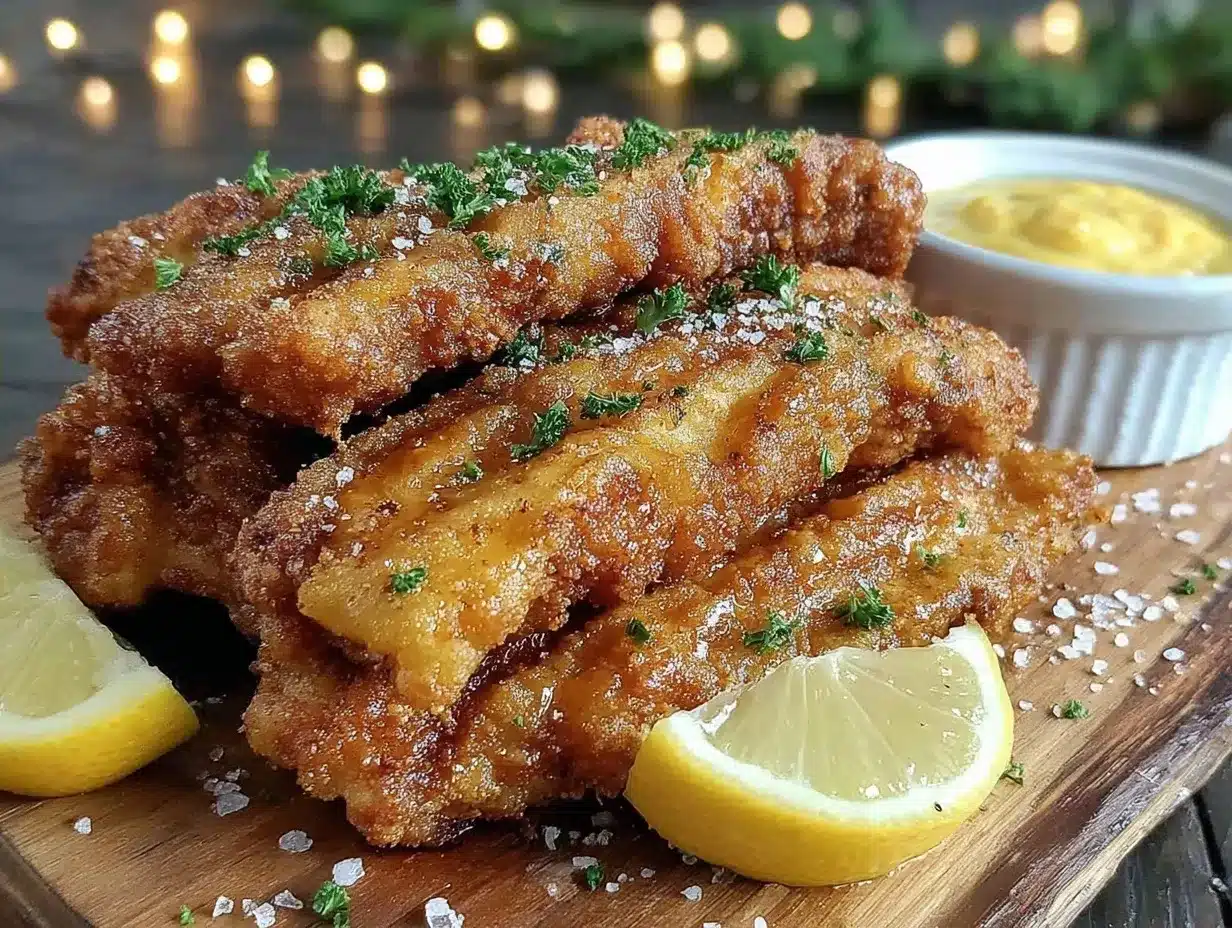
Making this fish is easier than you think. Follow these steps carefully for the best results.
- Prep the Fish: Start by patting the catfish fillets dry with paper towels. Remove any pin bones with tweezers if present. If the fillets are very thick, you can cut them in half to ensure even cooking. Season the fish lightly with salt and pepper on both sides. This helps the seasoning penetrate the fish itself, not just the crust. (Time: 5 minutes)
- Set Up the Dredging Station: Take three shallow dishes. In the first, place 1/2 cup of all-purpose flour. In the second, beat 2 eggs with 1/4 cup of water or buttermilk. In the third, mix the 1/2 cup cornmeal with the cayenne, paprika, garlic powder, onion powder, thyme, salt, and pepper. Whisk the dry spices into the cornmeal thoroughly so the seasoning is evenly distributed. (Time: 5 minutes)
- Dredge the Fillets: Take a piece of catfish and dredge it in the flour, shaking off any excess. Then, dip it into the egg wash, making sure it is fully coated. Finally, press it firmly into the cornmeal mixture. Use your hands to press the cornmeal onto the fish so it sticks well. Flip and repeat. Place the coated fillets on a plate. (Time: 10 minutes)
- Heat the Oil: Pour about 1 inch of vegetable oil into your cast iron skillet. Heat over medium-high heat. Use your thermometer to check the temperature. You want it to reach 350°F to 360°F. If the oil is too cool, the fish will absorb it and become greasy. If it is too hot, the crust will burn before the fish is cooked. (Time: 10-15 minutes)
- Fry the Catfish: Carefully place 2 or 3 fillets into the hot oil. Do not overcrowd the pan, as this drops the oil temperature. Fry for about 3-4 minutes per side. You will know it is ready when the crust is golden brown and crispy. The fish should float slightly when it is done. Use tongs to flip carefully. (Time: 8-10 minutes)
- Drain and Rest: Remove the fish from the oil and place it on the wire rack. Sprinkle with a little extra salt while it is still hot. Let it rest for 2-3 minutes. This allows the juices to redistribute and the crust to set. Serve immediately. (Time: 5 minutes)
Troubleshooting tip: If the crust starts to burn but the fish is still raw inside, lower the heat slightly. Catfish cooks quickly, so keep a close eye on it.
Cooking Tips & Techniques
Getting the perfect fry takes a little practice, but these tips will help you avoid common mistakes.
- Control the Heat: The most common mistake is letting the oil get too hot. Once you add the fish, the temperature will drop. Adjust the burner to keep it around 350°F. If it drops below 325°F, the fish will be oily. If it goes above 375°F, it will burn.
- Don’t Overcrowd: Frying in batches is key. If you put too many fillets in the pan at once, the oil temperature plummets, and the fish steams instead of fries. You want that rapid, aggressive bubbling around the edges.
- Pat Dry is Crucial: Any moisture on the fish will cause the oil to splatter and prevent the crust from sticking. Make sure the fish is bone-dry before dredging.
- Let the Coating Rest: After dredging, let the fish sit for 5-10 minutes before frying. This helps the breading adhere. I often do this while the oil is heating up.
- Use Fresh Oil: If you are frying multiple batches, check the oil color. If it looks dark or smoky, it is time to change it. Old oil has a lower smoke point and can impart a bad flavor.
I learned the hard way that rushing the dredging process leads to patchy crusts. Take your time pressing the cornmeal onto the fish. It should feel like a thick, even blanket. Also, do not flip the fish too early. Let it develop a good crust on one side before turning it. This ensures a crispy texture all around.
Variations & Adaptations
While the classic version is hard to beat, you can tweak this recipe to suit your tastes or dietary needs.
- Spicy Kick: Add 1 teaspoon of cayenne pepper or a dash of hot sauce to the cornmeal mixture. For extra heat, add some chopped jalapeños to the egg wash.
- Gluten-Free Option: Substitute the all-purpose flour with rice flour or a gluten-free flour blend. Use certified gluten-free cornmeal. The texture will be slightly different but still delicious.
- Baked Version: For a lighter option, bake the dredged fish on a wire rack at 400°F for 12-15 minutes, flipping halfway. Brush with a little oil before baking to help browning. It is not as crispy as fried, but it is much healthier.
- Herb Crust: Add fresh chopped parsley or chives to the cornmeal mixture for a fresher, brighter flavor profile.
- Beer Batter Twist: Replace the egg wash with a light beer batter for an even lighter, airier crust. This is more like a fish and chips style.
I once tried adding panko breadcrumbs to the mix, and it worked surprisingly well. It gave an extra layer of crunch. You can also swap catfish for tilapia or cod if you cannot find catfish. The cooking time will be similar, so keep an eye on it.
Serving & Storage Suggestions
This fish is best served immediately while the crust is still hot and crunchy.
- Serving Ideas: Serve with lemon wedges for a squeeze of acidity. Classic sides include coleslaw, collard greens, corn on the cob, or hushpuppies. A tartar sauce or remoulade is a great dipping option.
- Storage: Leftovers can be stored in an airtight container in the refrigerator for up to 2 days. The crust will soften, so it is best eaten fresh.
- Reheating: To reheat, use an air fryer or a conventional oven at 375°F for 5-7 minutes. This helps restore some of the crispiness. Avoid the microwave, as it will make the fish rubbery and soggy.
- Freezing: You can freeze the fried fish, but the texture will suffer. It is better to freeze the raw, dredged fillets and fry them later. Wrap them tightly in plastic wrap and foil.
The flavors of the spices continue to meld as it rests, so even day-old fish has great taste, even if the texture changes.
Nutritional Information & Benefits
Catfish is a lean, white fish that is packed with protein and essential nutrients.
- Protein: A 3-ounce serving provides about 15-20 grams of high-quality protein, which is great for muscle repair and satiety.
- Omega-3s: While not as high as salmon, catfish does contain healthy omega-3 fatty acids, which support heart and brain health.
- Low Carb: This recipe is naturally low in carbohydrates, especially if you skip the flour dredge. It fits well into keto or low-carb diets.
- Allergens: Contains fish and eggs. Use oil-free baking for a dairy-free option.
I enjoy this dish as part of a balanced meal because it is light yet satisfying. It is a great source of selenium and vitamin B12. Just be mindful of the oil used in frying, which adds calories. Using an air fryer can significantly reduce the fat content.
Conclusion
Making Classic Southern Fried Catfish at home is easier than you think. It brings the taste of the South to your kitchen without the fuss. The combination of cornmeal and spices creates a crust that is irresistible. I hope this recipe becomes a staple in your home, just as it has in mine.
Feel free to adjust the spice level to your liking. Add more cayenne if you like it hot, or more paprika for color. The beauty of this recipe is its flexibility.
Please try it out and let me know how it turns out! I love hearing from readers who have made this dish. Share your photos or tips in the comments below. And if you have a favorite side dish to go with it, tell me about it! Happy cooking, and enjoy every crunchy bite.
Frequently Asked Questions
What is the best oil for frying catfish?
Vegetable oil, peanut oil, or canola oil are the best choices. They have high smoke points, which means they can get hot enough to crisp the fish without burning. Peanut oil adds a nice nutty flavor, but vegetable oil is more neutral.
Can I use frozen catfish fillets?
Yes, you can. Just make sure to thaw them completely in the refrigerator overnight. Pat them very dry with paper towels before dredging. Any excess moisture will prevent the crust from sticking properly.
How do I keep the catfish crispy?
The key is to fry in batches and not overcrowd the pan. Also, place the fried fish on a wire rack instead of paper towels. This allows air to circulate underneath, keeping the bottom crust crisp. Serve immediately for the best texture.
What spices go well with catfish?
Traditional Southern spices include cayenne pepper, paprika, garlic powder, onion powder, and thyme. Salt and black pepper are essential. You can also add a little bit of lemon pepper for a citrusy kick.
How long does it take to fry catfish?
It typically takes about 3-4 minutes per side, depending on the thickness of the fillets. The fish is done when the crust is golden brown and the internal temperature reaches 145°F. The flesh should be opaque and flake easily with a fork.
Pin This Recipe!
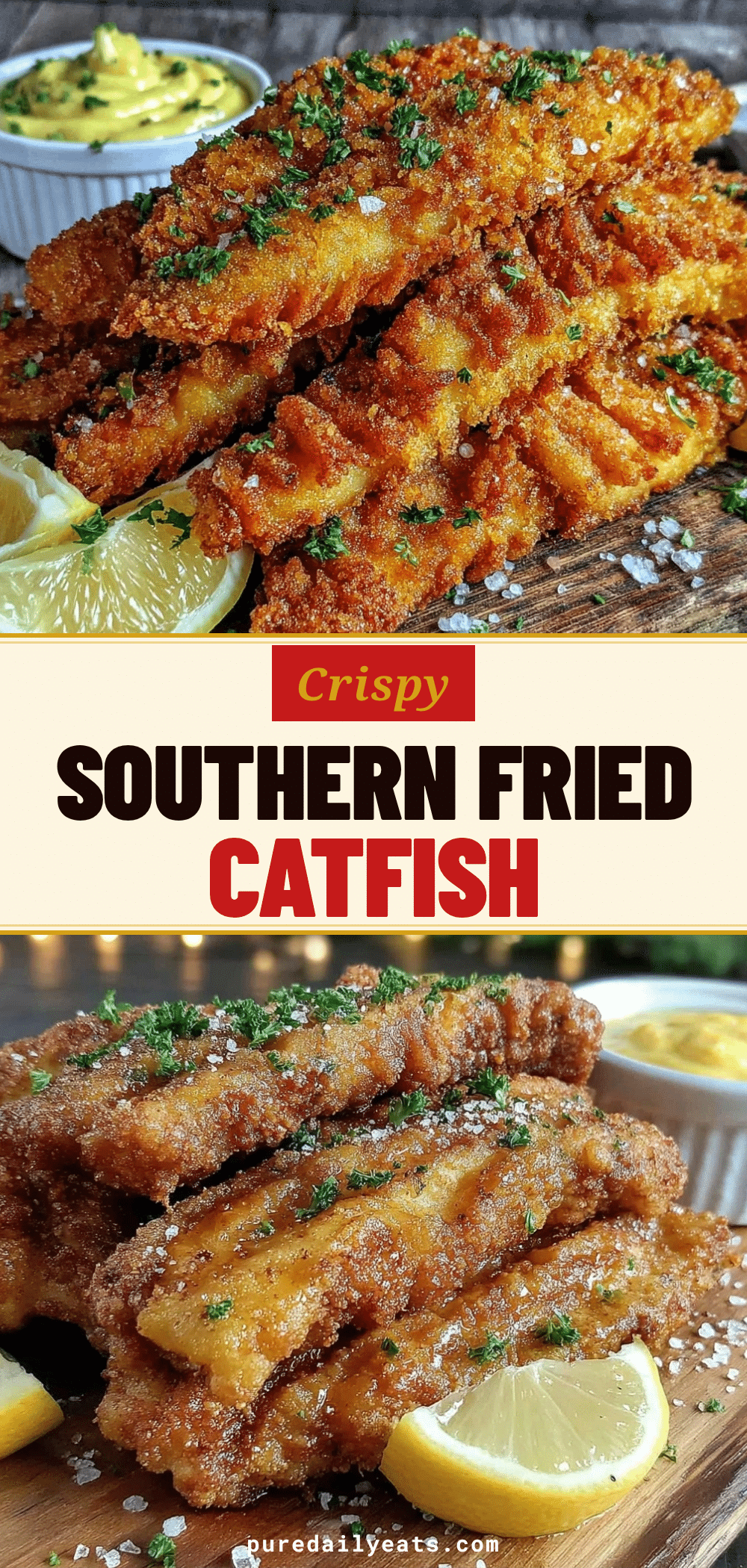

Classic Southern Fried Catfish: Easy Best Recipe
- Total Time: 35 minutes
- Yield: 4 servings 1x
Description
A quick and easy recipe for crispy, golden-brown Southern fried catfish using a simple cornmeal and flour dredge. This dish delivers authentic flavor and texture in under 30 minutes.
Ingredients
- 1.5 to 2 pounds catfish fillets (boneless, skinless)
- 1/2 cup yellow cornmeal (medium grind)
- 1/2 cup all-purpose flour
- 2 large eggs, beaten with 1/4 cup water or buttermilk
- 1/2 cup buttermilk (optional, for soaking)
- 1 teaspoon smoked paprika
- 1 teaspoon garlic powder
- 1 teaspoon onion powder
- 1/2 teaspoon dried thyme
- 1/2 teaspoon cayenne pepper
- 1 teaspoon kosher salt (plus more for finishing)
- 1/2 teaspoon black pepper
- 1 to 2 cups vegetable oil (for frying)
Instructions
- Pat catfish fillets dry with paper towels and remove any pin bones. Season lightly with salt and pepper.
- Set up a dredging station with three shallow dishes: one with flour, one with beaten eggs (mixed with water or buttermilk), and one with cornmeal mixed with all spices (paprika, garlic powder, onion powder, thyme, cayenne, salt, pepper).
- Dredge each fillet in flour, shaking off excess. Dip into the egg wash, then press firmly into the cornmeal mixture to coat both sides. Place coated fillets on a plate.
- Let the coated fish rest for 5-10 minutes to help the breading adhere.
- Heat 1 inch of vegetable oil in a heavy-bottomed skillet (like cast iron) over medium-high heat until it reaches 350°F to 360°F.
- Carefully place 2 or 3 fillets into the hot oil, ensuring not to overcrowd the pan. Fry for 3-4 minutes per side until golden brown and crispy.
- Remove fish from oil and place on a wire rack set over a baking sheet. Sprinkle with a little extra salt while hot.
- Let rest for 2-3 minutes before serving immediately.
Notes
For best results, ensure the fish is completely dry before dredging to prevent splattering and ensure the crust sticks. Do not overcrowd the pan, as this lowers the oil temperature and leads to greasy fish. If using frozen catfish, thaw completely and pat very dry. For a lighter option, bake at 400°F for 12-15 minutes, flipping halfway.
- Prep Time: 20 minutes
- Cook Time: 15 minutes
- Category: Main Course
- Cuisine: Southern
Nutrition
- Serving Size: 1 fillet
- Calories: 350
- Sugar: 1
- Sodium: 600
- Fat: 18
- Saturated Fat: 3
- Carbohydrates: 20
- Fiber: 1
- Protein: 25
Keywords: fried catfish, southern recipe, catfish recipe, easy dinner, crispy fish, cornmeal crust, seafood, comfort food