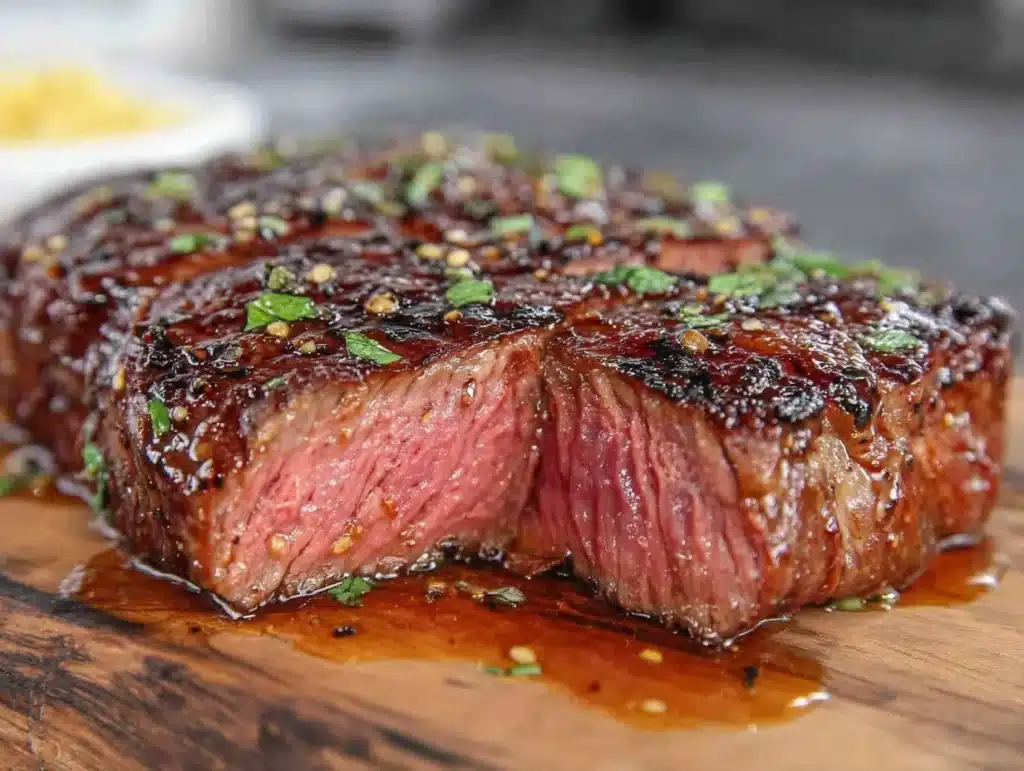
Let’s be honest for a second. There is nothing worse than biting into a steak that tastes like shoe leather. I’ve been there, standing over the grill with a sad, dry piece of meat, wondering where it all went wrong. You know that feeling when you spend money on a nice cut, only to ruin it with bad technique? It’s frustrating.
I discovered the secret to truly juicy steaks years ago, not in a fancy culinary school, but in my backyard on a humid July evening. I was trying to replicate a flavor I’d tasted at a small barbecue joint in Texas. The meat was so tender it fell apart with a fork, and the flavor was deep, smoky, and savory. I spent months testing different mixes until I found this specific combination of ingredients.
This Best Steak Marinade For Juicy Steaks isn’t just about adding flavor; it’s about transforming the texture. It breaks down tough fibers while locking in moisture. Whether you are a grilling novice or a seasoned pitmaster, this recipe delivers consistent results. It’s perfect for busy weeknights or weekend cookouts. Honestly, once you try it, you’ll never go back to store-bought packets.
I’ve tested this marinade with everything from ribeye to flank steak, and it works every single time. The balance of acid and oil is crucial, and I’ve fine-tuned it to ensure your meat stays succulent. It’s a simple mix of pantry staples you probably already have. Let’s face it, life is too short for bland dinner. This recipe saves time and elevates your outdoor cooking game without the stress.
Why You’ll Love This Recipe
After grilling hundreds of steaks over the last decade, I’ve learned that the magic happens before the meat even hits the fire. This marinade is my go-to because it respects the meat while adding a layer of complexity that plain salt and pepper can’t achieve. It’s not just a recipe; it’s a technique that guarantees success.
- Quick & Easy: You can whip this up in under five minutes. The steak only needs a few hours, making it perfect for those chaotic evenings when you want something special but don’t have hours to prep.
- Simple Ingredients: No fancy grocery trips needed. You likely have soy sauce, Worcestershire, garlic, and oil in your kitchen right now. It’s accessible comfort food.
- Perfect for Grilling Season: Whether it’s a casual backyard BBQ or a holiday gathering, this marinade fits any occasion. It pairs well with sides like grilled corn or asparagus.
- Crowd-Pleaser: Kids and adults alike love the savory, slightly sweet profile. It’s a guaranteed hit at any dinner table.
- Unbelievably Delicious: The texture is incredibly tender, and the flavor is rich and robust. It’s the kind of steak that makes you close your eyes after the first bite.
What makes this different from other marinades is the balance. Too much acid can make meat mushy, while too little leaves it tough. I’ve found that using a mix of soy sauce and Worcestershire provides umami depth without overpowering the beef. Plus, the brown sugar adds a subtle caramelization when grilled, creating that perfect crust. This isn’t just another version; it’s the one that works every time.
It’s comfort food reimagined—faster, easier, but with the same soul-soothing satisfaction. You can impress guests without stress, turning a simple meal into a memorable experience. Trust me, once you taste how tender it gets, you’ll be hooked.
What Ingredients You Will Need
This recipe uses simple, wholesome ingredients to deliver bold flavor and satisfying texture without the fuss. The key is using high-quality components that complement the natural taste of the beef. You don’t need exotic spices to make this work; you just need the right ratios.
For the Marinade Base:
- Soy Sauce: 1/2 cup. This provides the salty, umami foundation. I recommend using a low-sodium version if you are watching your salt intake, but regular works great too.
- Worcestershire Sauce: 2 tablespoons. This adds a tangy, savory depth that is essential for that classic steakhouse flavor.
- Olive Oil: 1/4 cup. The oil helps distribute the flavors and keeps the meat moist during cooking. Extra virgin is best for flavor, but regular olive oil works fine.
- Brown Sugar: 2 tablespoons. This helps with browning and adds a slight sweetness to balance the saltiness.
For the Aromatics:
- Garlic: 4 cloves, minced. Fresh garlic is non-negotiable here. Jarred garlic just doesn’t have the same punch.
- Black Pepper: 1 teaspoon. Freshly cracked pepper adds a nice heat and aroma.
- Dijon Mustard: 1 tablespoon. This acts as an emulsifier and adds a tangy kick that cuts through the richness of the meat.
- Apple Cider Vinegar: 1 tablespoon. The acid helps break down tough muscle fibers, ensuring tenderness.
For the meat, I always suggest using flank steak, skirt steak, or ribeye. Flank steak is leaner and absorbs the marinade beautifully, making it a budget-friendly option that tastes gourmet. Ribeye is richer and fattier, so it needs less marinating time to avoid becoming too soft. If you are looking for a gluten-free option, simply swap the soy sauce for tamari. This flexibility makes the recipe accessible to everyone.
Equipment Needed
You don’t need much to make this, but having the right tools makes a huge difference. A large glass or ceramic bowl is ideal for mixing the marinade. Glass is preferred because it doesn’t react with the acid in the vinegar and soy sauce. Plastic containers work too, but avoid metal bowls as they can tarnish.
A resealable plastic bag is my preferred method for marinating. It allows you to massage the marinade into the meat evenly and saves space in the fridge. If you don’t have bags, a shallow dish with a tight-fitting lid works well. Just make sure to turn the meat occasionally so every side gets coated.
For grilling, a sturdy grill grate is essential. If you are using a charcoal grill, keep your tongs and a spray bottle handy for managing flare-ups. I also recommend using a meat thermometer to ensure perfect doneness. Overcooked steak is the enemy of juiciness, so knowing your internal temperature is key. A good instant-read thermometer is a small investment that pays off every single time.
How to Make the Best Steak Marinade For Juicy Steaks
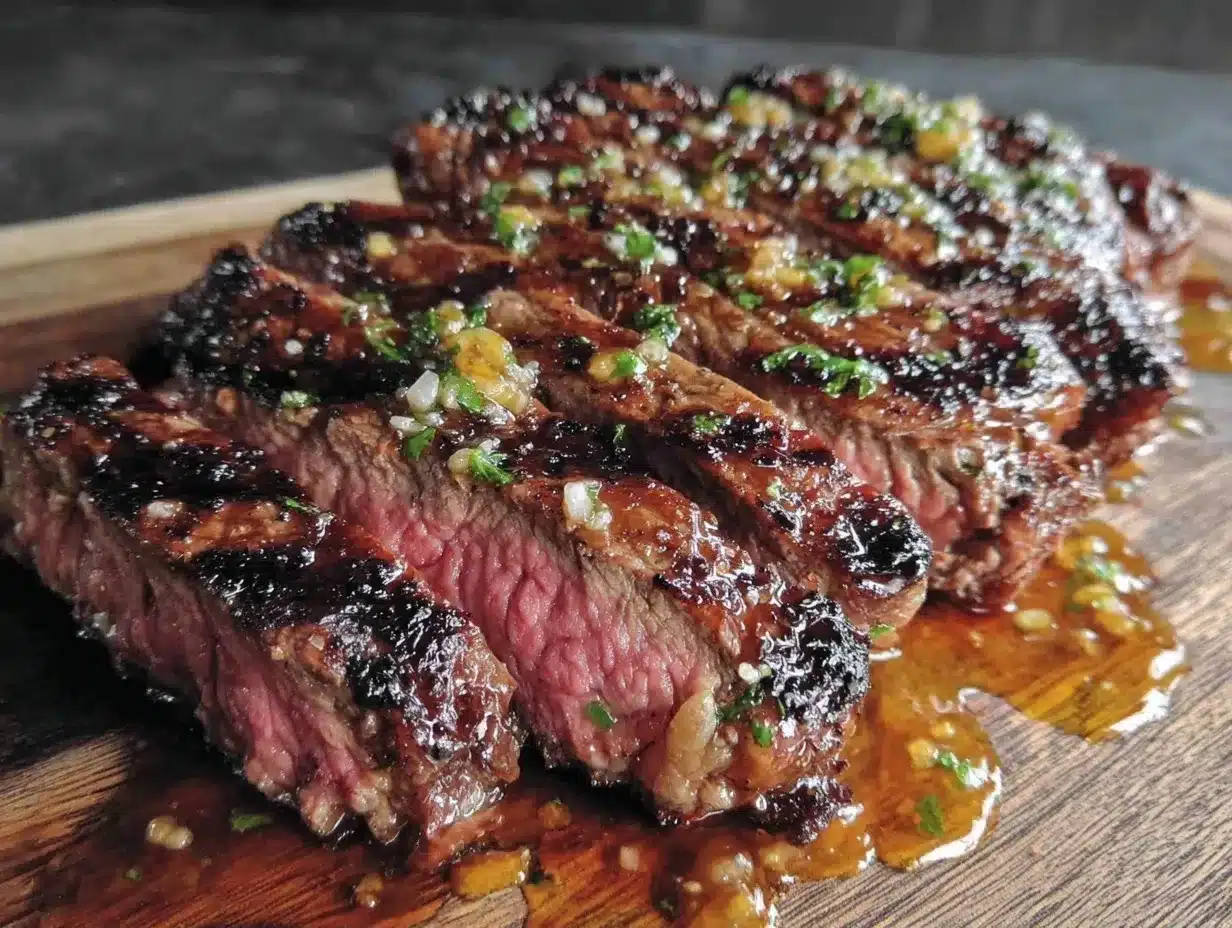
- Prepare the Marinade (5 minutes): In your glass bowl, combine the soy sauce, Worcestershire sauce, olive oil, brown sugar, minced garlic, black pepper, Dijon mustard, and apple cider vinegar. Whisk everything together vigorously until the sugar is completely dissolved. You want a smooth, uniform liquid. Taste it—it should be savory with a hint of sweetness and tang. Adjust the sugar if you prefer it less sweet.
- Prep the Steak: Take your steak out of the fridge and let it sit for about 20 minutes to take the chill off. This helps it cook more evenly. Pat it dry with paper towels. Removing excess surface moisture helps the marinade adhere better and promotes a better sear later on.
- Marinate the Meat: Place the steak in your resealable bag or dish. Pour the marinade over the meat. If using a bag, squeeze out as much air as possible before sealing. Massage the bag gently to ensure the steak is fully coated. Place it in the refrigerator. For flank or skirt steak, marinate for 4 to 8 hours. For ribeye, 2 to 4 hours is sufficient. Do not exceed 12 hours, or the acid can make the texture mushy.
- Preheat the Grill: About 30 minutes before you plan to cook, heat your grill to high heat. You want it hot, around 450-500°F (230-260°C). Clean the grates thoroughly and oil them lightly to prevent sticking. A hot grill creates a crust that locks in juices.
- Grill the Steak: Remove the steak from the marinade and let the excess drip off. Do not rinse it off; you want that flavor. Place the steak on the hot grill. Cook for 4-5 minutes on the first side for medium-rare. Flip it over and cook for another 3-4 minutes. Avoid moving the steak around too much; let it develop a nice char. If you have thick cuts, you may need to finish them in the oven at 400°F (200°C) for a few minutes.
- Rest the Meat: This is the most critical step. Once the steak reaches your desired internal temperature (130-135°F for medium-rare), remove it from the grill. Place it on a cutting board or warm plate and tent it loosely with foil. Let it rest for at least 10 minutes. This allows the juices to redistribute throughout the meat. If you cut it immediately, all those delicious juices will run out onto the plate, leaving you with dry meat.
How long should I marinate steak for?
For tender cuts like ribeye or sirloin, 2 to 4 hours is perfect. For tougher cuts like flank or skirt steak, you can go up to 8 hours to help break down the fibers. Never leave it longer than 12 hours, or the texture will suffer.
Can I use this marinade for other meats?
Absolutely. It works great on chicken thighs, pork chops, and even shrimp. The flavor profile is versatile enough to complement various proteins. Just adjust the cooking times accordingly.
Do I need to rinse the steak after marinating?
No, do not rinse it. Rinsing washes away the flavor and moisture you worked hard to add. Just let the excess drip off before grilling.
What is the best cut of steak for this recipe?
Flank steak is the classic choice because it’s lean and absorbs flavor well. Skirt steak is another excellent option for its rich beefy taste. Ribeye is great if you prefer a fattier, more luxurious texture.
How do I know when the steak is done?
Use a meat thermometer. For medium-rare, aim for 130-135°F. For medium, aim for 140-145°F. The temperature will rise a few degrees while resting, so pull it off the heat slightly early.
Cooking Tips & Techniques
Grilling steak can be intimidating if you don’t know the basics. One common mistake is overcrowding the grill. If you put too many steaks on at once, the temperature drops, and the meat steams instead of sears. Give each piece of steak plenty of space. This ensures a proper Maillard reaction, which gives you that delicious brown crust.
Another tip is to keep the lid closed as much as possible. Opening the lid constantly lets heat escape, making it harder to maintain a consistent cooking temperature. This is especially important for thicker cuts that need time to cook through without burning the outside.
I once tried marinating a steak in a metal bowl, and the acid reacted with the metal, giving the meat a metallic taste. Lesson learned: always use glass, ceramic, or plastic for marinating. Also, never reuse the marinade that touched raw meat unless you boil it first to kill bacteria. It’s a safety hazard you don’t want to take.
Timing is everything. If you are grilling for a dinner party, plan your timeline carefully. Get the marinade ready in the morning, and the steak will be ready by evening. This takes the stress out of last-minute prep. Trust the process, and don’t be afraid to make mistakes. Even pros mess up occasionally, but having a reliable recipe like this minimizes those risks.
Variations & Adaptations
While the original recipe is fantastic, there are plenty of ways to tweak it to suit your taste. If you love spicy food, add a teaspoon of cayenne pepper or some chopped jalapeños to the mix. This adds a kick that pairs wonderfully with the sweetness of the brown sugar.
For an Asian-inspired twist, swap the Worcestershire sauce for fish sauce and add a tablespoon of sesame oil. This creates a deeper, nuttier flavor profile that is amazing on flank steak. You can also add a slice of ginger for a fresh, zesty note.
If you are looking for a low-carb option, omit the brown sugar and use a sugar-free sweetener or a dash of stevia. You can also use coconut aminos instead of soy sauce for a lower sodium alternative. These small changes can make the recipe fit your dietary needs without sacrificing flavor.
I also like to add a splash of red wine to the marinade for a richer, more complex taste. It adds a fruity depth that complements the beef beautifully. Just reduce the amount of olive oil slightly to balance the liquid. Experimenting with these variations keeps the recipe fresh and exciting.
Serving & Storage Suggestions
When serving, slice the steak against the grain. This is crucial for tenderness, especially with flank or skirt steak. Cutting against the grain shortens the muscle fibers, making each bite easier to chew. Serve it with grilled vegetables, mashed potatoes, or a fresh salad. A glass of red wine pairs perfectly with the rich flavors of the steak.
If you have leftovers, store them in an airtight container in the refrigerator for up to 3 days. Reheat gently in a skillet over low heat to avoid overcooking. You can also freeze the marinated steak for up to 3 months. Just thaw it in the fridge before cooking. The flavors often deepen after a day or two, making leftovers surprisingly delicious.
Nutritional Information & Benefits
This marinade is relatively low in calories but high in flavor. Soy sauce and Worcestershire sauce provide sodium, so keep that in mind if you are watching your salt intake. The olive oil adds healthy fats, which help with satiety. Beef is a great source of protein, iron, and zinc, making it a nutritious choice for muscle building and energy.
For those with specific dietary needs, this recipe can be easily adapted to be gluten-free or dairy-free. Just ensure your soy sauce and other condiments are safe for your diet. The natural sugars from the brown sugar are minimal, making it suitable for most balanced diets. It’s a wholesome way to enjoy a hearty meal.
Conclusion
Making the Best Steak Marinade For Juicy Steaks is easier than you think, and the results are worth every minute. It transforms a simple cut of meat into a restaurant-quality experience right in your backyard. I hope this recipe brings you as much joy as it has brought me over the years. It’s a testament to the power of simple, well-chosen ingredients.
I encourage you to try it and make it your own. Feel free to adjust the spices to match your preferences. Share your results in the comments below—I love hearing about your cooking adventures. If you try this, don’t forget to tag me in your photos. Let’s keep the conversation going about all things grilled and delicious. Happy cooking!
Pin This Recipe!
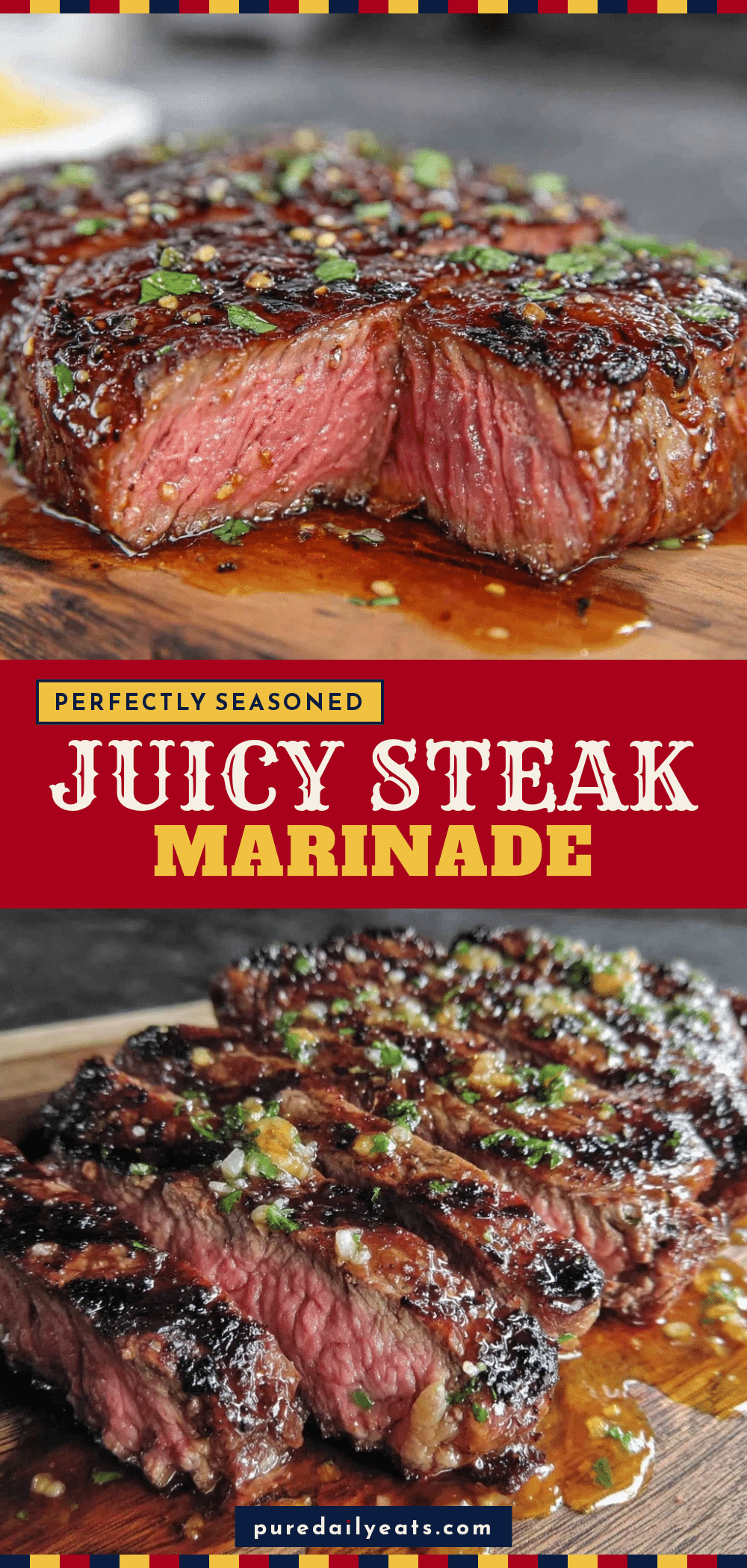

Best Steak Marinade For Juicy Steaks: Easy Homemade Recipe
- Total Time: 45 minutes
- Yield: 4 servings 1x
Description
A simple, homemade steak marinade using pantry staples that transforms tough cuts into tender, juicy steaks with a rich, savory flavor profile perfect for grilling.
Ingredients
- 1/2 cup Soy Sauce (or Tamari for gluten-free)
- 2 tablespoons Worcestershire Sauce
- 1/4 cup Olive Oil
- 2 tablespoons Brown Sugar
- 4 cloves Garlic, minced
- 1 teaspoon Black Pepper
- 1 tablespoon Dijon Mustard
- 1 tablespoon Apple Cider Vinegar
- Flank steak, skirt steak, or ribeye
Instructions
- In a glass or ceramic bowl, combine soy sauce, Worcestershire sauce, olive oil, brown sugar, minced garlic, black pepper, Dijon mustard, and apple cider vinegar. Whisk vigorously until the sugar is dissolved.
- Remove steak from the fridge and let it sit for 20 minutes to take the chill off. Pat dry with paper towels.
- Place the steak in a resealable plastic bag or shallow dish. Pour the marinade over the meat, ensuring it is fully coated. Remove excess air from the bag if using one.
- Refrigerate for 2 to 8 hours (2-4 hours for ribeye, 4-8 hours for flank/skirt steak). Do not exceed 12 hours.
- Preheat grill to high heat (450-500°F / 230-260°C). Clean and oil the grates.
- Remove steak from marinade, letting excess drip off. Do not rinse.
- Grill steak for 4-5 minutes on the first side, then flip and cook for another 3-4 minutes for medium-rare.
- Remove steak when internal temperature reaches 130-135°F. Tent with foil and let rest for at least 10 minutes before slicing against the grain.
Notes
Always use glass, ceramic, or plastic for marinating to avoid metallic tastes from acid reacting with metal. Do not rinse the steak after marinating; just let excess drip off. Slice against the grain for maximum tenderness. For gluten-free, swap soy sauce for Tamari. For low-carb, omit brown sugar or use a sugar-free alternative.
- Prep Time: 5 minutes
- Cook Time: 10 minutes
- Category: Main Course
- Cuisine: American
Nutrition
- Serving Size: 1 steak
- Calories: 350
- Sugar: 5
- Sodium: 900
- Fat: 22
- Saturated Fat: 8
- Carbohydrates: 6
- Protein: 30
Keywords: steak marinade, juicy steak, grilling recipe, flank steak, homemade marinade, beef recipe, easy dinner