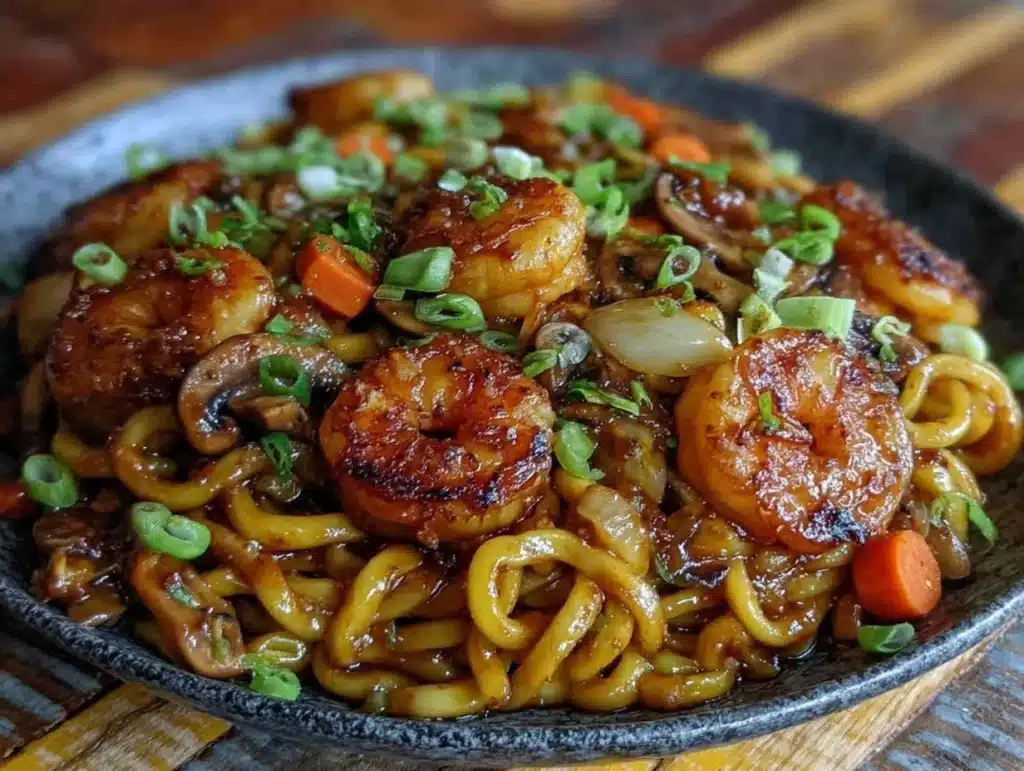
The smell of searing shrimp hits you before the doorbell even rings. Honestly, it smells better than the delivery guy’s car, which is saying something. I remember the first time I made crispy yaki udon with shrimp, I was exhausted. It was 6:30 PM, the kids were hungry, and my brain was already checked out. I stared at the clock, knowing a $25 order of noodles would take forty-five minutes to arrive. So, I did what any sleep-deprived parent does: I raided the pantry.
I found some dried udon noodles, a bag of frozen shrimp, and a few sad-looking veggies in the crisper drawer. I wasn’t aiming for Michelin-star perfection. I just wanted dinner on the table before the pizza driver could even find my house. What happened next was a happy accident. The noodles got a little too crispy in the pan, and the shrimp turned golden and sweet. It was messy, fast, and absolutely delicious.
You know how some recipes feel like work? This one doesn’t. It feels like cheating. You get that rich, savory umami punch you crave, but it’s made in twenty minutes. I’ve tested this crispy yaki udon with shrimp recipe over a dozen times. Some nights I add extra bok choy. Other nights, I just go heavy on the garlic. But the core method stays the same: high heat, quick stir, and zero stress. If you’re tired of waiting for delivery apps to load, this is your new best friend. It’s comfort food that respects your time.
Why You’ll Love This Recipe
Let’s face it, life is busy. We don’t always have the luxury of slow-cooking a broth for hours. This crispy yaki udon with shrimp recipe is designed for real life. It’s the kind of meal that saves your evening when you’re running on empty. I’ve found that the key to loving this dish is the texture contrast. You get the chew of the noodles, the snap of the veggies, and the crispiness of the shrimp. It’s not just another stir-fry. It has soul.
Here is why this recipe stands out from the crowd:
* **Quick & Easy**: This comes together in under 20 minutes. It is perfect for those chaotic weeknights when you need fuel fast.
* **Simple Ingredients**: You likely have most of this in your kitchen right now. No fancy trips to three different specialty stores are needed.
* **Perfect for Busy Families**: It’s a crowd-pleaser that kids actually eat. The sweet and savory sauce is a hit with picky eaters.
* **Unbelievably Delicious**: The texture is next-level. The slightly charred edges of the noodles add a depth of flavor that boiling never gives you.
* **Better Than Takeout**: It beats delivery on time, every single time. You save money and eat fresher ingredients.
What makes this specific version different? It’s the technique. Most people boil udon noodles and then toss them in sauce. That’s fine, but it’s not *this* recipe. I pan-fry the noodles first. This creates a crispy layer that soaks up the sauce without getting soggy. It’s a small step that makes a huge difference. I learned this trick from a local Japanese diner, and I’ve never looked back.
This recipe isn’t just about feeding the family. It’s about that moment you take the first bite and close your eyes. It’s comfort food reimagined for speed. It’s the kind of dinner that makes you feel like a culinary genius, even if you’re wearing pajamas. It’s perfect for impressing guests without the stress of a multi-course meal. Honestly, it’s just good food.
What Ingredients You Will Need
This recipe relies on simple, wholesome ingredients to deliver bold flavor. You don’t need a complicated pantry to make this work. The magic is in the balance of sweet, salty, and savory. Here is what you need to gather before you start cooking.
**For the Noodles and Protein:**
* **Dried Udon Noodles**: Look for thick, wheat-based noodles. I prefer brands that are pre-cooked but dried, as they hold up better to frying. Avoid the fresh refrigerated packs if you want that crispy edge.
* **Large Shrimp**: Peel and deveined. Size 21/25 or 16/20 works best. They cook fast and stay tender.
* **Neutral Oil**: Avocado or canola oil works well for high-heat searing. Olive oil might burn too quickly here.
**For the Vegetables:**
* **Bok Choy**: Baby bok choy is easiest. Slice it lengthwise so the stems and leaves cook evenly. It adds a nice crunch.
* **Carrots**: Julienned or thinly sliced. They add sweetness that balances the savory sauce.
* **Green Onions**: Both the white and green parts. Use the whites for cooking and the greens for garnish.
* **Garlic and Ginger**: Fresh is non-negotiable here. Pre-minced jars just don’t have the punch you need for this level of flavor.
**For the Yaki Sauce:**
* **Soy Sauce**: Use a low-sodium version if you are watching your salt. It gives that essential umami base.
* **Mirin**: Sweet rice wine. It adds a glossy sheen and subtle sweetness. If you can’t find it, a splash of rice vinegar with a pinch of sugar works.
* **Sesame Oil**: Toasted sesame oil. A little goes a long way. It provides that nutty aroma.
* **Sake or Dry White Wine**: Helps deglaze the pan and adds complexity.
* **Cornstarch**: Mixed with water to thicken the sauce. This ensures the sauce clings to the noodles instead of pooling at the bottom.
* **Sesame Seeds**: For garnish. Adds texture and visual appeal.
I recommend using a high-quality soy sauce like Kikkoman. It has a balanced saltiness that doesn’t overpower the shrimp. Also, make sure your shrimp are patted dry before cooking. Wet shrimp steam instead of sear, and you want that crispy exterior. If you’re looking for a quick side dish to go with this, check out my perfect cajun garlic butter cod for another fast seafood option.
Equipment Needed
You don’t need a fancy kitchen to make this work. A large skillet or a wok is essential. I use a carbon steel wok because it heats up fast and holds heat well. If you don’t have one, a large non-stick skillet works fine. The key is surface area. You need room to toss the noodles without them steaming in a pile.
A pair of long tongs is your best friend here. They help you flip the noodles gently without breaking them. A sharp knife is also important for prepping the veggies quickly. I also recommend having a small bowl for mixing the sauce beforehand. This is called *mise en place*. It keeps you from burning the garlic while you’re hunting for soy sauce.
For budget-friendly options, a standard stainless steel pan works, but you’ll need to be careful not to stick the noodles. A little extra oil helps. Just make sure your pan is hot before you add the oil. Cold oil means soggy noodles. Keep your tools simple and your focus sharp.
Preparation Method
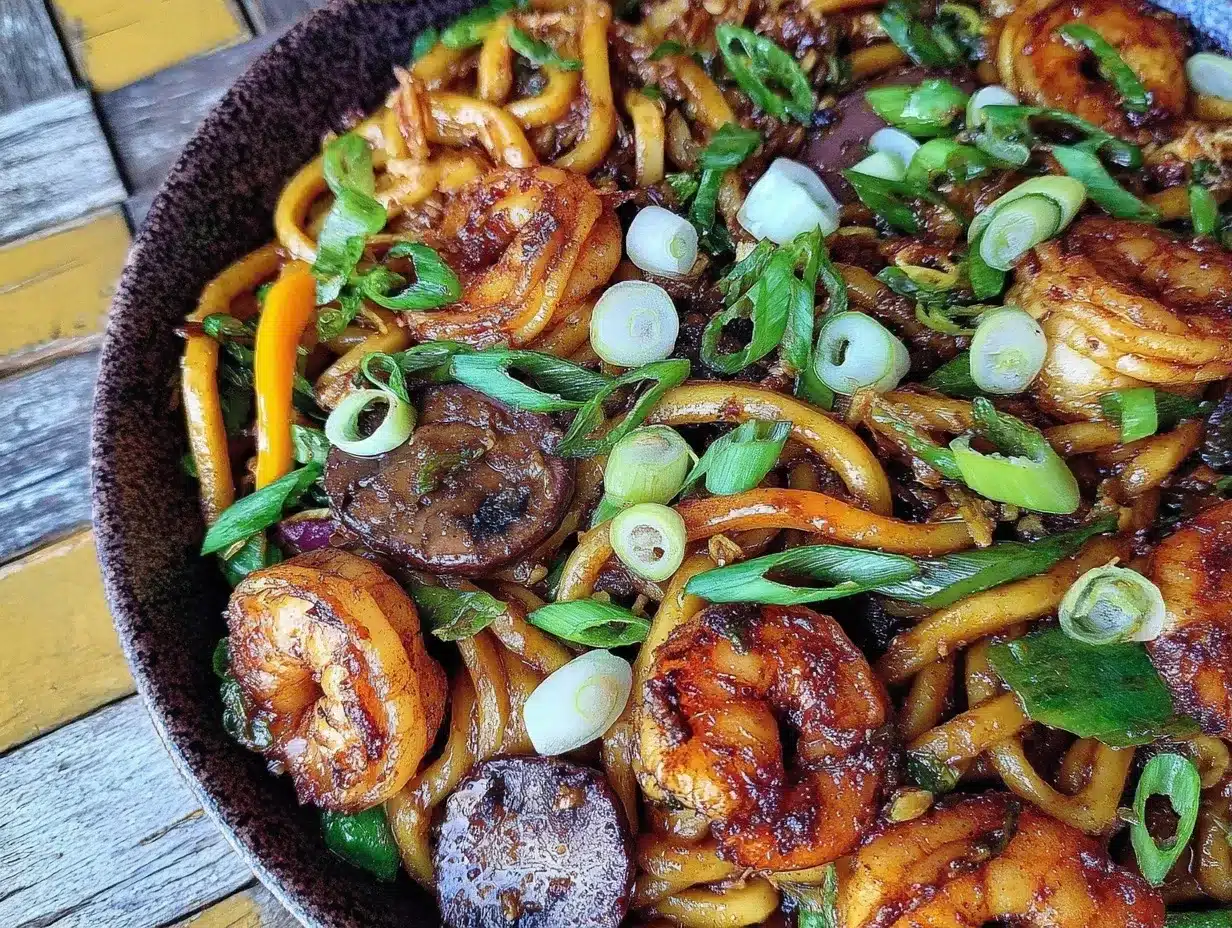
1. **Prep the Noodles**: Cook the dried udon noodles according to the package directions, but reduce the time by one minute. They should be slightly undercooked. Drain and rinse with cold water. This stops the cooking and keeps them firm. Toss with a teaspoon of oil to prevent sticking. This takes about 5 minutes.
2. **Season the Shrimp**: Pat the shrimp dry with paper towels. This is crucial for browning. Season lightly with salt and pepper. Set aside.
3. **Make the Sauce**: In a small bowl, whisk together 3 tablespoons of soy sauce, 1 tablespoon of mirin, 1 tablespoon of sake, 1 teaspoon of sesame oil, and 1 teaspoon of cornstarch mixed with 2 tablespoons of water. Whisk until smooth. Set aside. This takes 2 minutes.
4. **Sear the Shrimp**: Heat a large skillet or wok over medium-high heat. Add 1 tablespoon of oil. Once the oil shimmers, add the shrimp in a single layer. Do not crowd the pan. Cook for 1-2 minutes per side until pink and crispy. Remove from the pan and set aside. This takes 4 minutes.
5. **Crisp the Noodles**: Wipe out the pan if needed, or just push the shrimp aside. Add another tablespoon of oil. Add the cooked udon noodles. Press them down gently with a spatula. Let them sit for 2-3 minutes until the bottom is golden and crispy. Flip the noodles carefully. You want them to get a little charred. This takes 5 minutes.
6. **Add Veggies**: Add the carrots, bok choy stems, and garlic to the pan. Stir-fry for 1-2 minutes until the veggies start to soften but stay crisp. Add the bok choy leaves last, as they wilt quickly. This takes 3 minutes.
7. **Sauce It Up**: Pour the sauce mixture over the noodles and veggies. Toss everything together quickly. The sauce will thicken and coat everything in about 1 minute. If it looks too thick, add a splash of water. If too thin, let it cook for another minute.
8. **Finish and Serve**: Return the shrimp to the pan. Toss gently to warm them through. Remove from heat. Garnish with sliced green onions and sesame seeds. Serve immediately. This takes 2 minutes.
Total time is roughly 20 minutes. The key is speed. Keep the heat high and your movements quick.
Cooking Tips & Techniques
The biggest mistake people make with yaki udon is boiling the noodles too much. Remember, you are frying them later. If they are mushy before they hit the pan, they will fall apart. Undercook them by a minute or two.
Another tip is to not overcrowd the pan. If you put all the noodles in a small skillet, they steam. You want them to sear. Use the largest pan you have. If you are cooking for a crowd, cook in batches. It’s better to have two smaller portions crispy than one big soggy mess.
I once tried to make this in a small frying pan. The noodles stuck and burned. Lesson learned. Invest in a large wok or skillet. Also, make sure your garlic and ginger are added at the right time. Add them when the oil is hot but not smoking. If the oil is too hot, they burn instantly and taste bitter. If it’s too cool, they release water and steam the noodles.
Timing is everything. Have all your ingredients prepped before you turn on the stove. This is a fast recipe, and hesitation leads to burning. Keep your utensils close. Move with confidence. The sizzle of the shrimp and the aroma of the sesame oil will tell you everything you need to know.
Variations & Adaptations
You can easily adapt this recipe to fit your diet or taste preferences. Here are a few ideas:
* **Vegetarian Option**: Swap the shrimp for firm tofu. Press the tofu first, then cube it. Pan-fry it until crispy before adding the noodles. The texture holds up well.
* **Spicy Kick**: Add a teaspoon of chili crisp or sriracha to the sauce. It adds heat and flavor complexity.
* **Extra Veggies**: Add snap peas, bell peppers, or mushrooms. They all work well with the savory sauce.
* **Gluten-Free**: Use tamari instead of soy sauce. Check that your udon noodles are made from buckwheat or rice flour if you are avoiding wheat.
I often add a fried egg on top for extra protein. The yolk breaks over the noodles and creates a rich, creamy sauce. It’s a personal favorite. You can also use soba noodles for a nuttier flavor, though they require a gentler touch to avoid breaking.
Serving & Storage Suggestions
Serve this dish hot, straight from the pan. It looks best on a shallow bowl or plate. The contrast of the golden noodles and green onions is visually appealing. Pair it with a simple green tea or a light lager to cut the richness.
Leftovers can be stored in an airtight container in the refrigerator for up to 3 days. The noodles may soften in the fridge, which is normal. To reheat, use a skillet over medium heat with a splash of water. This restores the crispiness better than a microwave. Avoid the microwave if you can help it. It tends to make noodles rubbery.
The flavors actually meld together nicely the next day. The sauce penetrates the noodles more deeply. It’s a great option for lunch the next day. Just be mindful of the shrimp texture, which can become chewy if over-reheated.
Nutritional Information & Benefits
This recipe offers a balanced mix of protein, carbs, and fats. Shrimp is a lean protein source, rich in selenium and vitamin B12. Udon noodles provide energy from carbohydrates. The vegetables add fiber and essential vitamins.
A typical serving contains approximately 450-500 calories. This is a moderate calorie count for a main dish. It is satisfying without being overly heavy. If you are watching sodium, use low-sodium soy sauce and control the amount you add.
For those with gluten sensitivities, ensure your udon noodles are certified gluten-free. The shrimp is naturally gluten-free, so just check your sauce ingredients. This meal supports a healthy, active lifestyle when paired with other nutritious foods.
Conclusion
This crispy yaki udon with shrimp is more than just dinner. It’s a solution for busy nights. It’s fast, flavorful, and forgiving. I love this recipe because it reminds me that good food doesn’t have to be complicated. It just needs heat, time, and the right ingredients.
I encourage you to try it and make it your own. Add your favorite veggies. Adjust the spice level. Experiment with different proteins. The base recipe is a canvas for your creativity.
If you make this, I’d love to hear how it turns out. Leave a comment below with your tips or variations. Share your photos online and tag me. Let’s inspire each other to cook more at home.
Remember, the best meals are the ones made with love and a little bit of haste. Enjoy every bite.
Frequently Asked Questions
Can I use fresh udon noodles?
Yes, but they cook very quickly. Reduce the boiling time significantly. You also need to be gentle when frying them to avoid breaking them apart. Dried udon holds up better to the crisping process.
What can I substitute for mirin?
If you don’t have mirin, you can use a mix of rice vinegar and sugar. Use 1 tablespoon of rice vinegar and 1 teaspoon of sugar. It mimics the sweetness and acidity of mirin well.
Why are my noodles sticking to the pan?
This usually happens if the pan isn’t hot enough or if there isn’t enough oil. Make sure your skillet is preheated properly. Also, ensure the noodles are tossed with a little oil before frying to prevent clumping.
Can I meal prep this recipe?
It is best served fresh. The noodles continue to absorb the sauce and can become soggy. If you must prep, store the noodles and sauce separately. Combine and reheat in a skillet just before eating.
Is shrimp the only protein I can use?
No. You can use chicken, beef, or tofu. Just ensure the protein is cooked through before adding it back to the pan at the end. Adjust cooking times based on the size of your protein pieces.
Pin This Recipe!
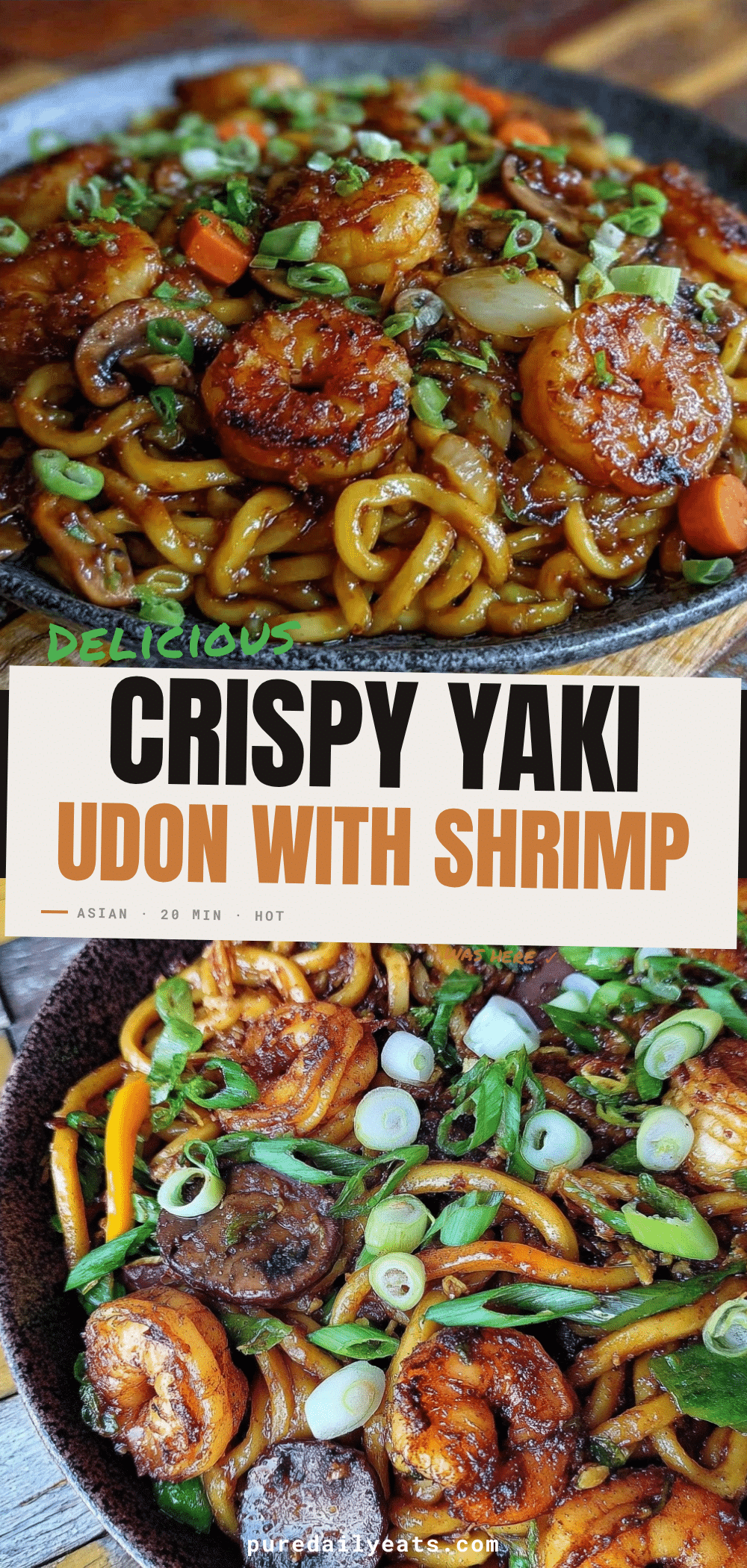

Crispy Yaki Udon With Shrimp: Fast Dinner
- Total Time: 20 minutes
- Yield: 4 servings
Description
A quick and easy weeknight dinner featuring pan-fried udon noodles with a crispy texture, seared shrimp, and fresh vegetables in a savory umami sauce. Ready in under 20 minutes.
Ingredients
- Dried Udon Noodles (thick, wheat-based)
- Large Shrimp (peeled and deveined, size 21/25 or 16/20)
- Neutral Oil (Avocado or Canola)
- Baby Bok Choy (sliced lengthwise)
- Carrots (julienned or thinly sliced)
- Green Onions (white parts for cooking, green parts for garnish)
- Garlic (fresh, minced)
- Ginger (fresh, minced)
- Soy Sauce (low-sodium recommended)
- Mirin (sweet rice wine)
- Sake or Dry White Wine
- Sesame Oil (toasted)
- Cornstarch (mixed with water)
- Sesame Seeds (for garnish)
- Salt and Pepper
Instructions
- Cook dried udon noodles according to package directions but reduce time by one minute. Drain, rinse with cold water, and toss with a teaspoon of oil to prevent sticking.
- Pat shrimp dry with paper towels and season lightly with salt and pepper.
- In a small bowl, whisk together 3 tablespoons soy sauce, 1 tablespoon mirin, 1 tablespoon sake, 1 teaspoon sesame oil, and 1 teaspoon cornstarch mixed with 2 tablespoons water.
- Heat a large skillet or wok over medium-high heat with 1 tablespoon oil. Add shrimp in a single layer and cook for 1-2 minutes per side until pink and crispy. Remove and set aside.
- Add another tablespoon of oil to the pan. Add cooked udon noodles and press down gently. Let sit for 2-3 minutes until the bottom is golden and crispy, then flip carefully.
- Add carrots, bok choy stems, and garlic to the pan. Stir-fry for 1-2 minutes until veggies start to soften. Add bok choy leaves last and cook until wilted.
- Pour the sauce mixture over the noodles and veggies. Toss quickly to coat and thicken the sauce (about 1 minute). Add a splash of water if too thick.
- Return shrimp to the pan and toss gently to warm through. Remove from heat, garnish with green onions and sesame seeds, and serve immediately.
Notes
Ensure noodles are undercooked before frying to maintain texture. Do not overcrowd the pan to prevent steaming. Have all ingredients prepped before cooking (mise en place) as the recipe moves quickly. For gluten-free, use tamari and check noodle ingredients. For vegetarian, swap shrimp for firm tofu.
- Prep Time: 5 minutes
- Cook Time: 15 minutes
- Category: Main Course
- Cuisine: Japanese
Nutrition
- Serving Size: 1 plate
- Calories: 475
- Sugar: 6
- Sodium: 800
- Fat: 15
- Saturated Fat: 2
- Carbohydrates: 55
- Fiber: 3
- Protein: 25
Keywords: yaki udon, crispy noodles, shrimp stir fry, quick dinner, weeknight meals, Japanese noodles, fast seafood, easy recipe